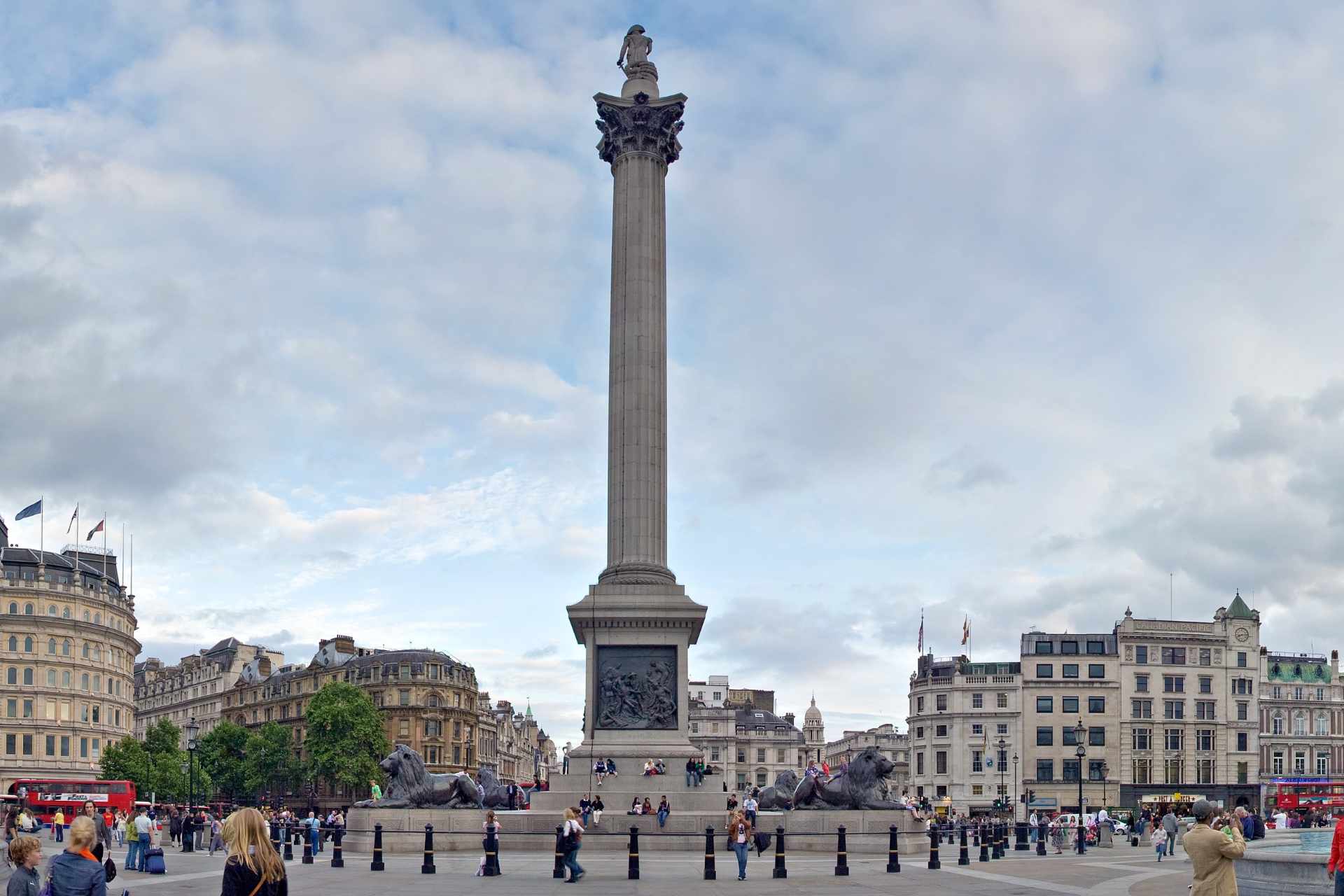
Trafalgar Square, one of London’s most iconic public spaces, stands as a vibrant testament to British history and culture. Located in the heart of Westminster, this bustling square serves as a central hub, connecting major arteries of the city including the Strand, Whitehall, and the Mall.
The square’s origins date back to the early 19th century when it was developed as part of John Nash’s plan to improve the area. It was officially named Trafalgar Square in 1830, commemorating the British naval victory at the Battle of Trafalgar in 1805.
Dominating the square is Nelson’s Column, a towering 52-metre Corinthian column topped with a statue of Admiral Horatio Nelson, who died leading the British to victory at Trafalgar. The column, designed by William Railton and completed in 1843, is guarded at its base by four magnificent bronze lions sculpted by Sir Edwin Landseer. These lions, added in 1867, have become beloved symbols of the square and popular photo opportunities for visitors.
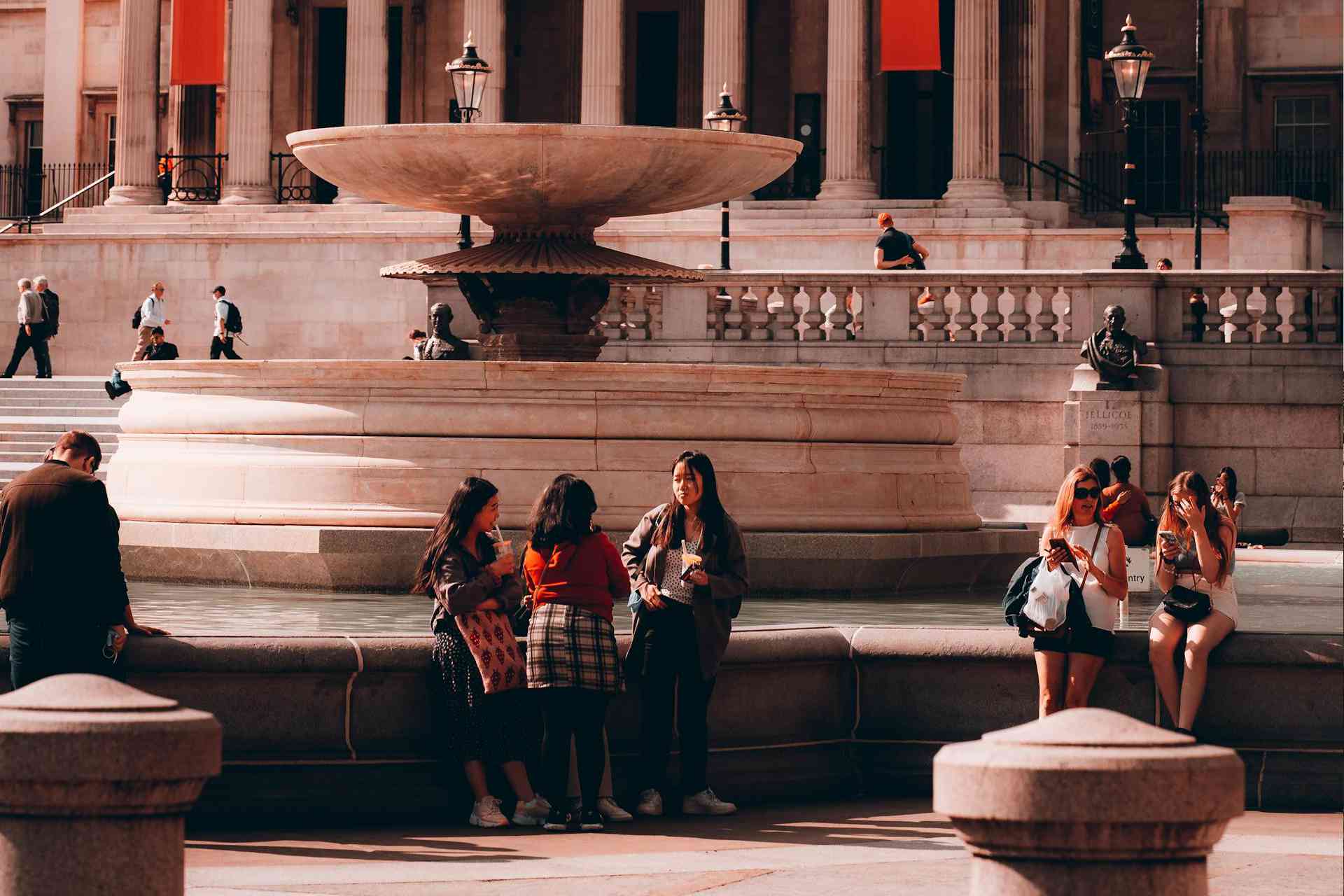
The north side of the square is occupied by the impressive neoclassical façade of the National Gallery. Founded in 1824, this world-renowned art museum houses a vast collection of over 2,300 paintings dating from the mid-13th century to 1900. Its presence adds a significant cultural dimension to the square, drawing art enthusiasts from around the globe.
To the northeast stands St Martin-in-the-Fields, a beautiful Anglican church designed by James Gibbs in the 18th century. Known for its stunning architecture and excellent acoustics, the church hosts regular classical music concerts and has a reputation for supporting the homeless through its social outreach programs.
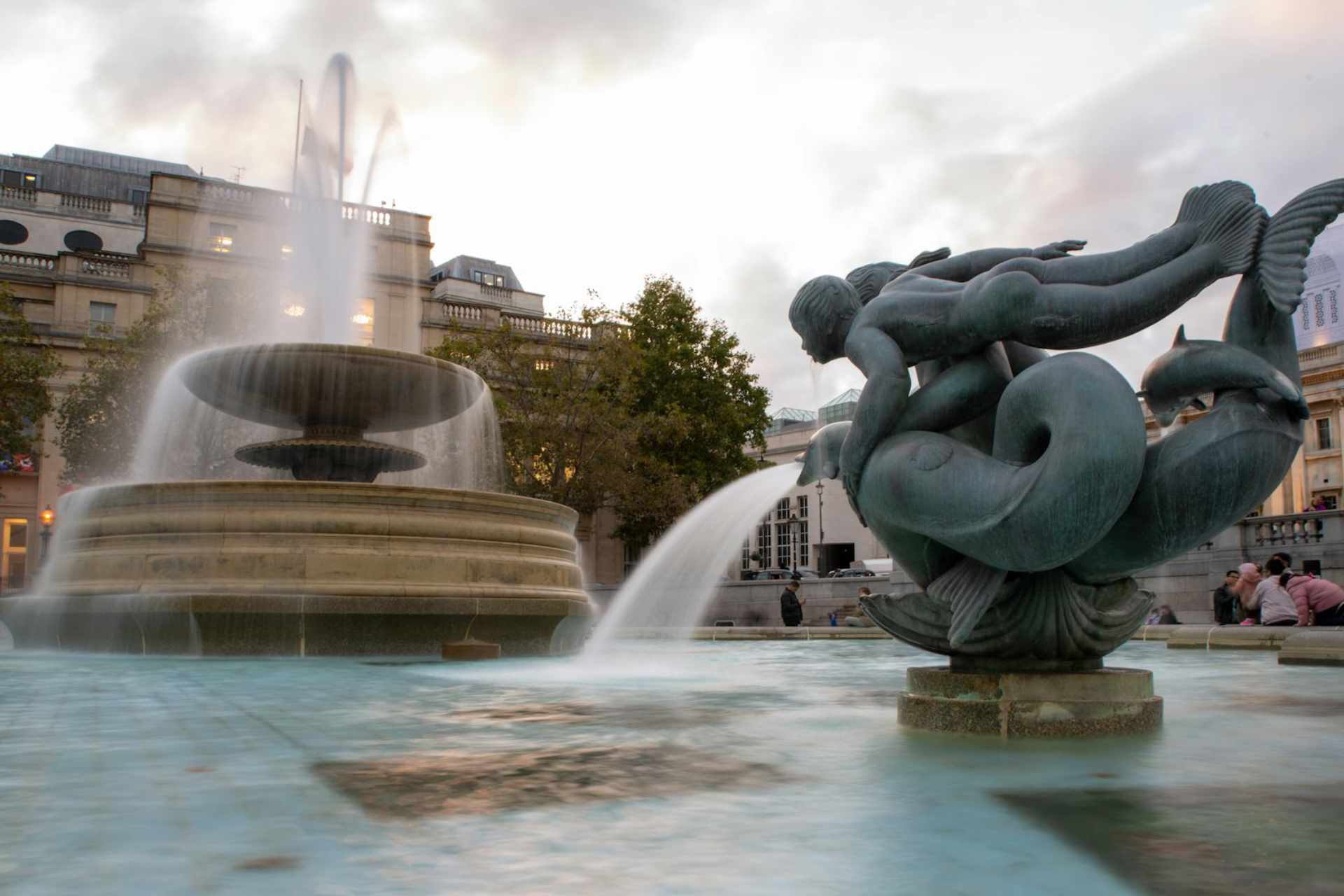
The square features two fountains, designed by Sir Edwin Lutyens in 1939. These replaced earlier fountains and were intended to reduce the open space available for public gatherings, a concern for authorities at the time. Today, these fountains add to the square’s aesthetic appeal and provide soothing background noise to the bustling urban environment.
One of the square’s most intriguing features is the Fourth Plinth, located in the northwest corner. Originally intended to hold an equestrian statue, it remained empty for many years. Since 1998, it has been used to showcase temporary contemporary art installations, adding a dynamic and often controversial element to the historic space.
Trafalgar Square has long been a focal point for community gatherings, political demonstrations, and cultural celebrations. It hosts numerous events throughout the year, including the St Patrick’s Day parade, Chinese New Year celebrations, and various film premieres at the nearby cinemas in Leicester Square.
During the Christmas season, the square takes on a festive appearance with the erection of a large Christmas tree. This tree, typically a Norwegian spruce standing over 20 meters tall, has been an annual gift from the people of Norway since 1947, in gratitude for Britain’s support during World War II.
Once famous for its pigeons, feeding these birds was discouraged and eventually banned in 2003 due to health and safety concerns. This has significantly changed the square’s atmosphere, allowing for more diverse uses of the space.
Trafalgar Square’s central location makes it an ideal starting point for exploring London. Within walking distance are numerous attractions including The London Eye, Big Ben, 10 Downing Street, Buckingham Palace, Westminster Abbey, and the Houses of Parliament. Its proximity to the entertainment district of the West End also makes it a popular meeting point for theatregoers and night owls alike.
How To Get To Trafalgar Square
Trafalgar Square, situated in the heart of Central London, is easily accessible via various public transport options. The nearest Underground station is Charing Cross, served by the Northern and Bakerloo lines, just a 3-minute walk away. Other nearby stations include:
- Leicester Square (Piccadilly line): 8-minute walk
- Piccadilly Circus (Piccadilly and Bakerloo lines): 10-minute walk
- Covent Garden (Piccadilly line): 12-minute walk
- Tottenham Court Road (Elizabeth and Central lines): 15-minute walk
For those preferring buses, numerous routes stop near or at Trafalgar Square, including:
9, 12, 13, 15, 23, 24, 26, 29, 87, 88, 91, 139, 159, 176, and 453
These routes provide flexible options from various parts of the city, making Trafalgar Square one of London’s most accessible landmarks. Whether you’re travelling by Underground or bus, the square’s central location ensures it’s easily reachable from anywhere in the city.
Nearby Attractions
The following landmarks and attractions are within walking distance of Trafalgar Square, making it an excellent starting point for exploring central London:
National Gallery
Located on the north side of Trafalgar Square, the National Gallery houses one of the world’s finest collections of Western European paintings from the 13th to the early 20th century. Founded in 1824, it’s home to over 2,300 works including masterpieces by Van Gogh, da Vinci, Monet, and Rembrandt. The gallery offers free admission to its permanent collection, making it accessible to all visitors.
National Portrait Gallery
Adjacent to the National Gallery, the National Portrait Gallery focuses on portraits of historically important and famous British people. Established in 1856, it was the first portrait gallery in the world. The collection includes paintings, photographs, and sculptures, offering a unique perspective on British history and culture through portraiture.
Both galleries complement each other, providing visitors with a comprehensive view of art history and British cultural heritage. Their proximity allows art enthusiasts to easily visit both in a single trip, making for an enriching cultural experience in the heart of London.
Leicester Square
Leicester Square, situated in the heart of London’s West End, is a vibrant and bustling entertainment hub. This pedestrianised square, dating back to 1670, has evolved into one of the city’s most popular tourist destinations.
At its centre lies a small garden with a statue of William Shakespeare surrounded by busts of famous figures associated with the area. The square is perhaps best known as the home of London’s cinema land, hosting numerous movie premieres at its flagship cinemas: Odeon Leicester Square and Empire. These red-carpet events often draw celebrities and fans alike, adding to the square’s glamorous reputation.
Beyond film, Leicester Square is a focal point for theatre and nightlife. It’s surrounded by numerous theatres, making it a natural gathering place for theatregoers. The area is also packed with restaurants, bars, and nightclubs, catering to a diverse crowd of locals and tourists.
Notable attractions around the square include:
- M&M’s World: A massive chocolate-themed store
- Lego Store: Featuring impressive Lego sculptures
- The Hippodrome Casino: A popular gaming and entertainment venue
Leicester Square’s central location makes it easily accessible, with its own Underground station served by the Northern and Piccadilly lines.
While some locals might view it as touristy, Leicester Square remains an integral part of London’s entertainment scene, embodying the city’s vibrant and diverse character.
China Town
London’s Chinatown, nestled between Shaftesbury Avenue and Leicester Square in the West End, is a vibrant cultural enclave instantly recognisable by its ornate Chinese gates and lanterns. This compact neighbourhood offers an authentic slice of Chinese culture in the heart of the British capital. Established in the 1950s by immigrants primarily from Hong Kong, it has evolved into a bustling hub for both London’s Chinese community and curious visitors.
The area is renowned for its diverse array of restaurants serving authentic cuisine from various Chinese regions, alongside Asian supermarkets, traditional bakeries, and popular bubble tea shops. During Chinese New Year, Chinatown comes alive with colourful celebrations, dragon dances, and festive decorations. The streets, lined with buildings featuring traditional Chinese architectural elements, are home to an eclectic mix of businesses, including Chinese medicine stores and lively karaoke bars.