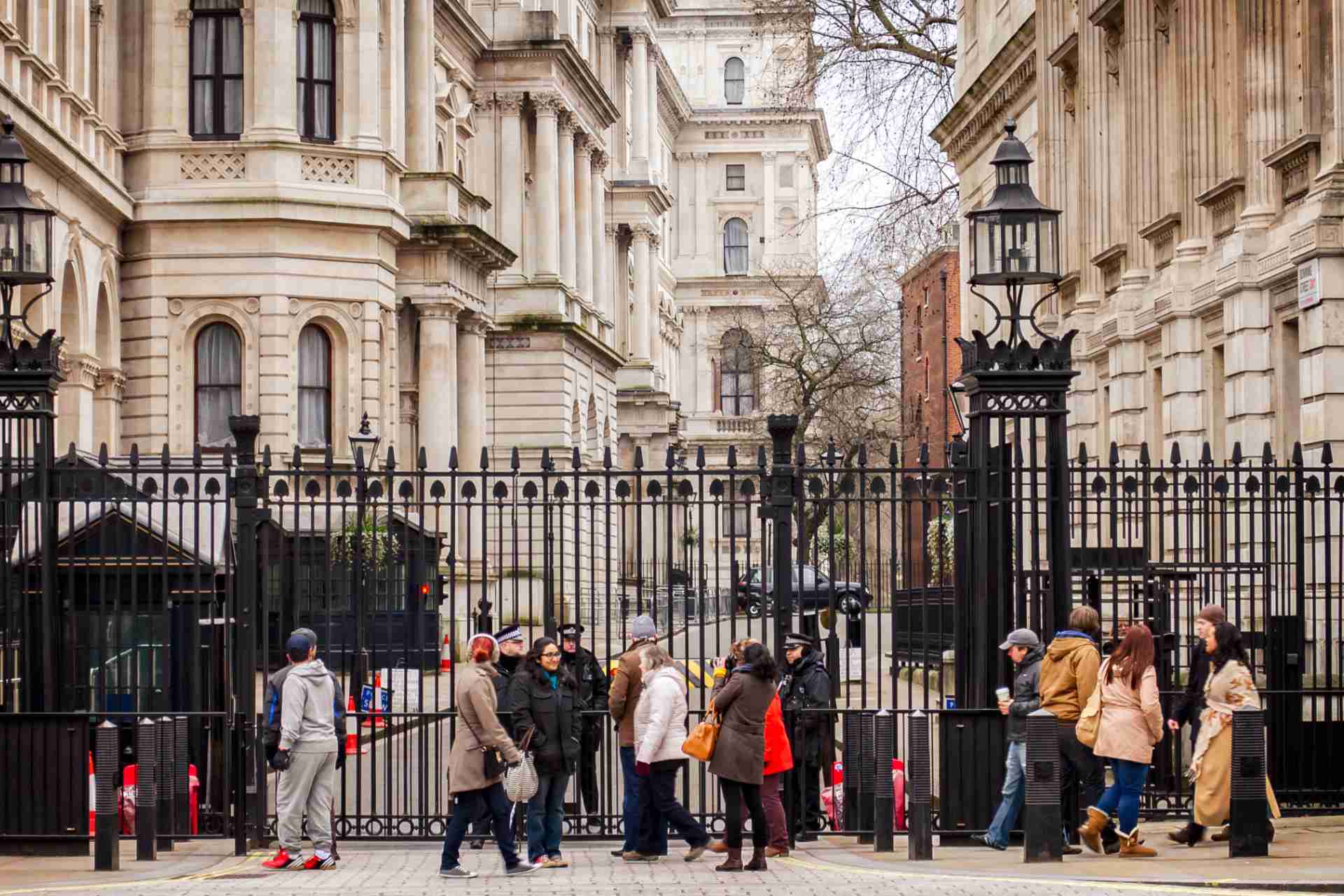
In London, at the heart of the Westminster city’s government district, 10 Downing Street is one of Britain’s most famous addresses.
This unassuming terraced house serves as the official residence and office of the British Prime Minister, playing a crucial role in the nation’s governance. Built-in the late 17th century, the property has housed Prime Ministers since 1735, bearing witness to countless historical decisions and events that have shaped the country.
The building’s exterior is characterised by its famous black door, adorned with a white “10”. However, tourists might be surprised to learn that the door is actually dark green and repainted regularly to maintain its iconic appearance.
Given its central role in British politics, 10 Downing Street has long been tightly secured. The street has been gated and heavily guarded since 1989, preventing tourists from entering the building or approaching the door directly. The best view for visitors is from the gates at the end of Downing Street, which offer the clearest glimpse of this historic facade.
While the interior of 10 Downing Street is not open to the public, it houses a complex array of rooms serving various functions. The building contains state rooms for official receptions, private living quarters for the Prime Minister and their family, and numerous offices for staff and advisers. Perhaps the most significant room is the Cabinet Room, where the Prime Minister chairs weekly meetings with senior ministers to discuss and decide upon matters of national importance.
Despite its relatively modest exterior, 10 Downing Street remains a symbol of British political power and tradition. Its walls have witnessed the tenures of figures such as Winston Churchill, Margaret Thatcher, and many other notable Prime Ministers who have shaped the course of British history. For tourists, even a glimpse of this unassuming yet immensely significant building offers a tangible connection to the heart of British democracy and governance.
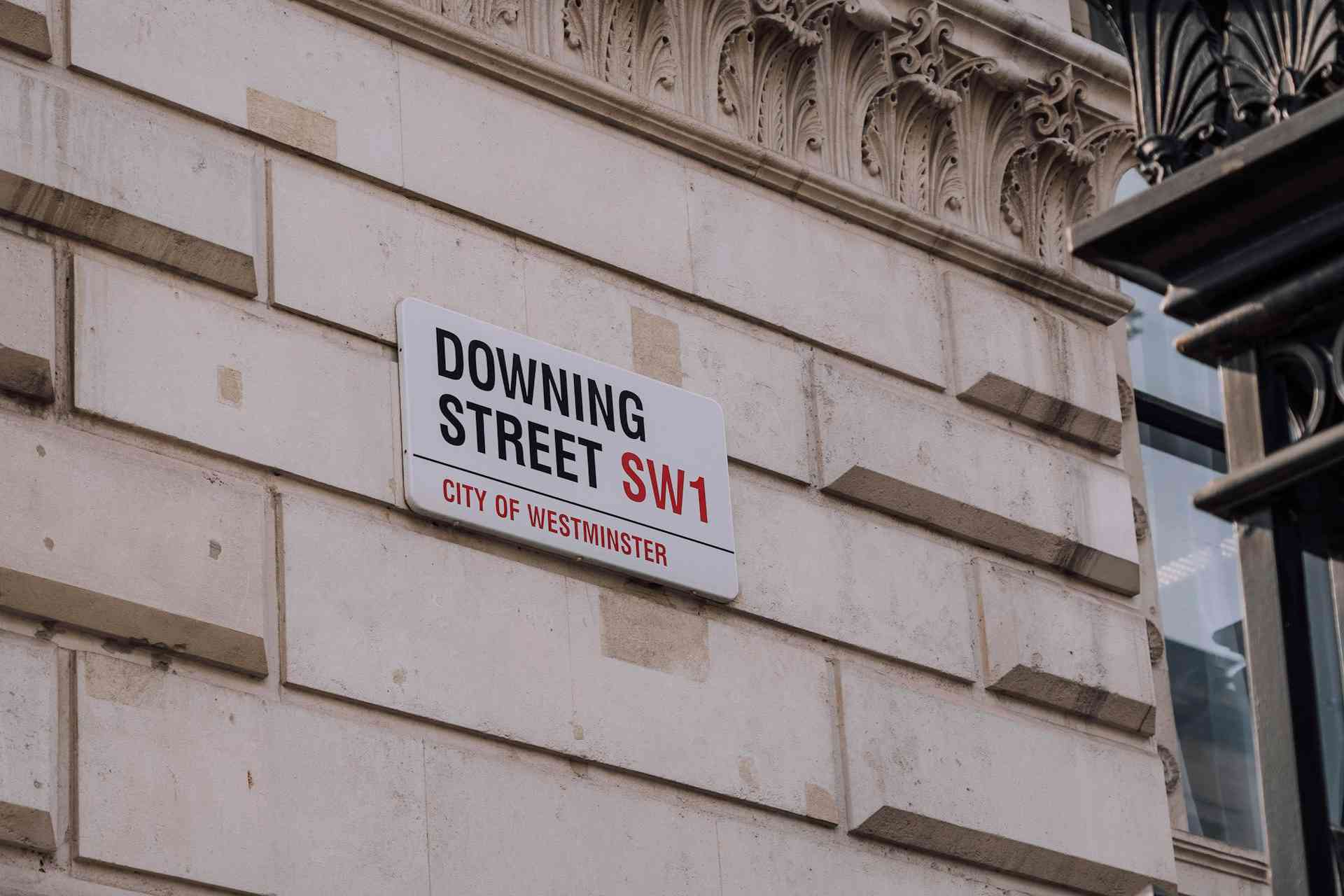
How To Get To Downing Street
Downing Street is situated in Whitehall, which stretches from Trafalgar Square to the Houses of Parliament. Whitehall is renowned as the heart of government and houses several prominent government buildings, such as the Treasury and the Ministry of Defence.
Downing Street is easily accessible via various public transport options. The nearest Underground station is Westminster.
For those who enjoy a brief stroll, Trafalgar Square is a mere eight-minute walk away.
By bus, you can take the following routes: 12, 139, 159, 453, 735, 87, 88, 9 and 24.

Nearby Attractions
The following landmarks and attractions are within walking distance of Downing Street.
Banqueting House
Banqueting House, a magnificent Jacobean building on Whitehall, stands as a testament to 17th-century royal grandeur. Designed by Inigo Jones, it is the sole surviving component of the Palace of Whitehall. The building is renowned for its stunning Rubens ceiling paintings and its sombre history as the site of King Charles I’s execution in 1649. Today, visitors can explore its opulent interiors and learn about its rich royal heritage, making it a captivating stop for those interested in British history and architecture.
Horse Guards
Horse Guards, an imposing edifice on Whitehall, serves as the official entrance to St James’s and Buckingham Palace. Its archway, guarded by mounted sentries of the Household Cavalry, is a popular photo spot for tourists. Adjacent lies Horse Guards Parade, a vast ceremonial ground that hosts the annual Trooping the Colour. Within the Horse Guards building, the Household Cavalry Museum offers visitors a glimpse into the history and daily life of the regiment, showcasing gleaming uniforms, weaponry, and royal artefacts. This site provides a unique blend of pomp, ceremony, and living history.
St James’s Park
St James’s Park, one of London’s most picturesque Royal Parks, offers a tranquil oasis amid the bustle of Westminster. Spanning 57 acres, it boasts a serene lake home to pelicans, ducks, and swans. The park provides stunning views of Buckingham Palace, Horse Guards Parade, and the London Eye. Its flower beds burst with colour throughout the year, whilst tree-lined paths offer peaceful walks. The park’s rich history dates back to Henry VIII’s time, and today it serves as a favourite spot for both locals and tourists seeking respite or a scenic picnic locale in the heart of the capital.
Big Ben
Big Ben, the iconic clock tower at the northern end of the Houses of Parliament, is one of London’s most recognisable landmarks. Officially named the Elizabeth Tower since 2012, ‘Big Ben’ actually refers to the great bell within. Standing at 96 metres tall, its four clock faces, each measuring 7 metres in diameter, have kept Londoners punctual since 1859. The tower’s distinct neo-Gothic architecture and the sonorous chimes of its bell have become symbols of British democracy and resilience. Recently restored, its gleaming golden details and newly refurbished clock mechanism ensure Big Ben will continue to captivate visitors and locals alike for generations to come.
The London Eye
The London Eye, a colossal cantilevered observation wheel on the South Bank of the River Thames, offers unparalleled views of the capital. Standing 135 metres tall, it was the world’s tallest cantilevered observation wheel when erected in 1999. Each of its 32 capsules provides a slow-moving, 30-minute ‘flight’ over London, offering breathtaking 360-degree vistas of the city’s skyline. This modern icon has become one of London’s most popular attractions, drawing millions of visitors annually to experience the city from a unique perspective.