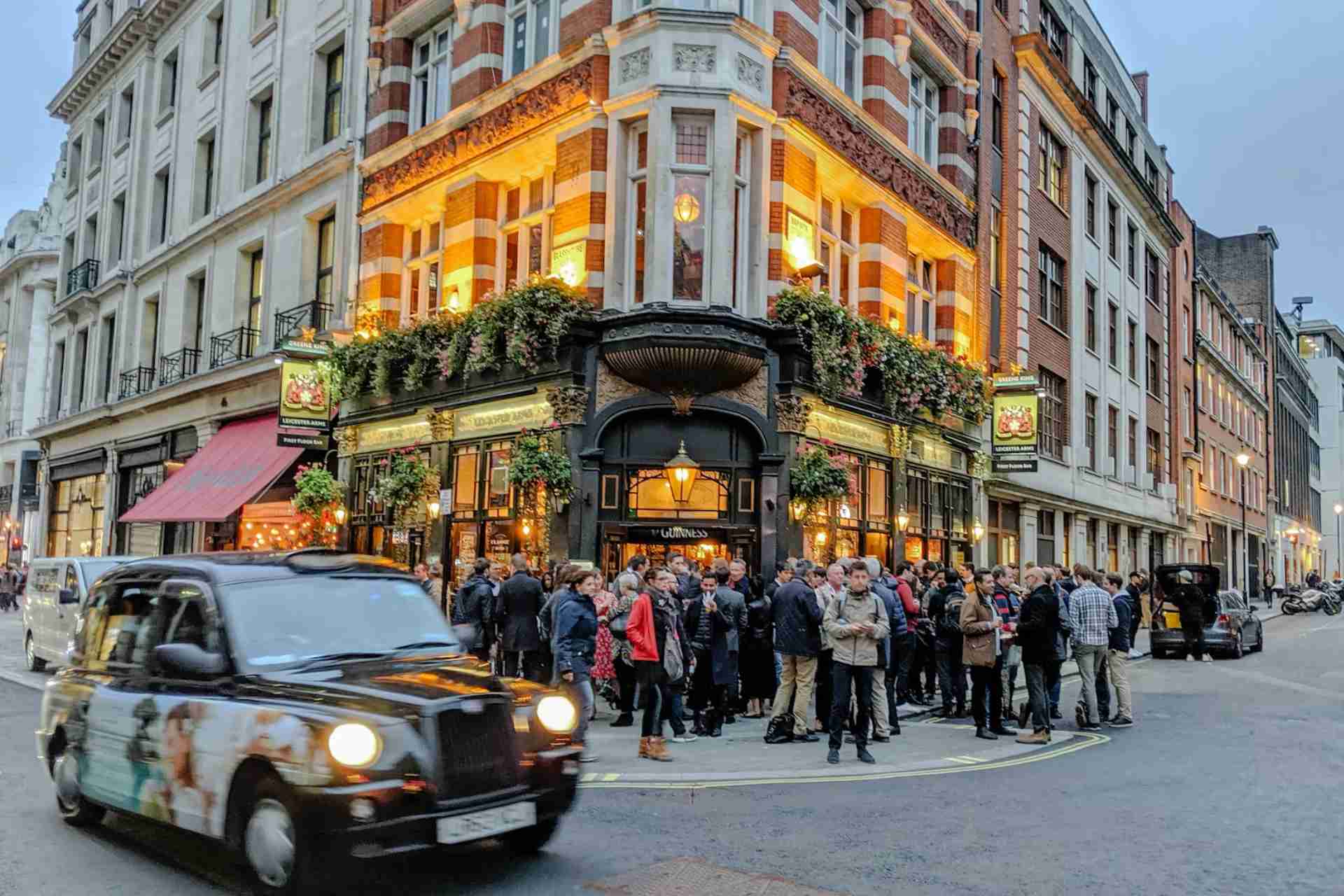
Soho isn’t tidy and it’s never quiet. It’s a tight grid of streets just off Oxford Street where coffee shops, strip clubs, dive bars and restaurants all fight for the same square footage. It doesn’t try to be one thing, and that’s the point. One minute you’re stepping over last night’s takeaway outside a jazz bar, the next you’re queueing for fresh cannoli or getting blasted by disco from an open doorway.
The area’s been rewriting itself for centuries. It started out as hunting fields, then turned fashionable, then fell from grace, though for Soho, that was more of a beginning than an end. Artists, musicians and outsiders made it theirs. So did the sex trade. So did the club scene. Over time, it became one of the few parts of London where absolutely everything coexisted, and somehow still does.
Soho’s roots go back to the 17th century, when it was still fields. The name likely comes from a hunting cry, shouted across what was then open countryside. By the 18th century, it had developed into a fashionable residential area before slipping into something grittier and more unpredictable.
By the 20th century, Soho had a reputation, and not a quiet one. It became London’s red-light district, but also its creative nerve centre. Writers, filmmakers, musicians and outsiders of every stripe gravitated here, drawn by the cheap rents and the looseness of the rules.
That spirit never left. Today, Soho is a mix of old and new, sleaze and style, luxury and grime.
There are gay bars and drag clubs that light up after dark, cake shops and cafés that open at first light, and sex shops that never seem to close. The LGBTQ+ scene is front and centre, especially around Old Compton Street. Brewer Street still has its edge, while Frith Street, Greek Street and Dean Street are packed with restaurants, bars and places that always feel slightly too full, in the best way.
There are indie bookshops selling zines and poetry next to high-end cocktail bars. You can grab bao buns, Spanish tapas, or late-night kebabs all within the same ten steps. You’ll find music venues, tattoo parlours, hidden jazz clubs, and everything from Michelin stars to instant noodles. Soho doesn’t care what you’re into, it probably has it, and it’s open late.

Soho Opening Times
Soho never really shuts. The streets stay busy well past midnight, and most bars and clubs have late licences, especially on Fridays and Saturdays. Whether it’s 11am or 3am, you’ll find places open, music playing and people still on the move. Noise is part of the postcode.
How To Get To Soho
Soho is surrounded by some of London’s busiest transport links. The nearest tube stations are Oxford Circus, Tottenham Court Road, Piccadilly Circus and Leicester Square, all within walking distance. Buses are frequent and cut through every angle of central London, with routes like the 14, 19, 38, 55 and 176 all passing close by. Walking is often faster than trying to drive through the maze of one-way streets.

The Local Area
Soho sits at the crossroads of almost everything. Head east and you’re in Covent Garden, with its polished piazzas, pop-up markets and street performers. South takes you into Leicester Square and China Town, always buzzing, always busy. North leads to Fitzrovia, slower-paced but still packed with great food and galleries. West takes you to Mayfair, where the atmosphere changes fast, from late-night noise to private clubs and quiet money.
Oxford Street, Regent Street and Carnaby Street are all nearby if you’re in the mood to shop. Trafalgar Square, the National Gallery and even the West End theatres are just minutes away. You can get lost here, but never far from something interesting.